
What Makes a Successful Padel Club?Design, Hospitality & Commercial Strategy in the UK’s Fastest Growing Leisure Sector
Updated: Aug 16

Padel is rapidly becoming one of the UK’s fastest-growing leisure markets.
From standalone operators and wellness brands through to mixed-use developments and hospitality groups, investment into padel facilities is accelerating across the country.
But while demand for courts continues to rise, the most successful padel destinations are no longer being shaped purely around sport.
They are being designed around experience.
At the forefront of this sector is Zero Gravity Design, a UK-based interior design and fit-out studio known for delivering thoughtful, design-led commercial interiors that balance creativity with practical and commercial considerations.
Padel Is No Longer Just About the Court
Early-generation facilities focused heavily on maximising court numbers and operational efficiency.
However, as the market matures, user expectations are changing quickly.
Today’s customers increasingly expect environments that feel premium, social, hospitality-led and experience-driven — not simply functional sports facilities.
The strongest commercial operators understand that dwell time, atmosphere and repeat visitation are just as important as gameplay itself.
This shift is creating a significant opportunity for developers and operators willing to think differently about how padel environments are designed.

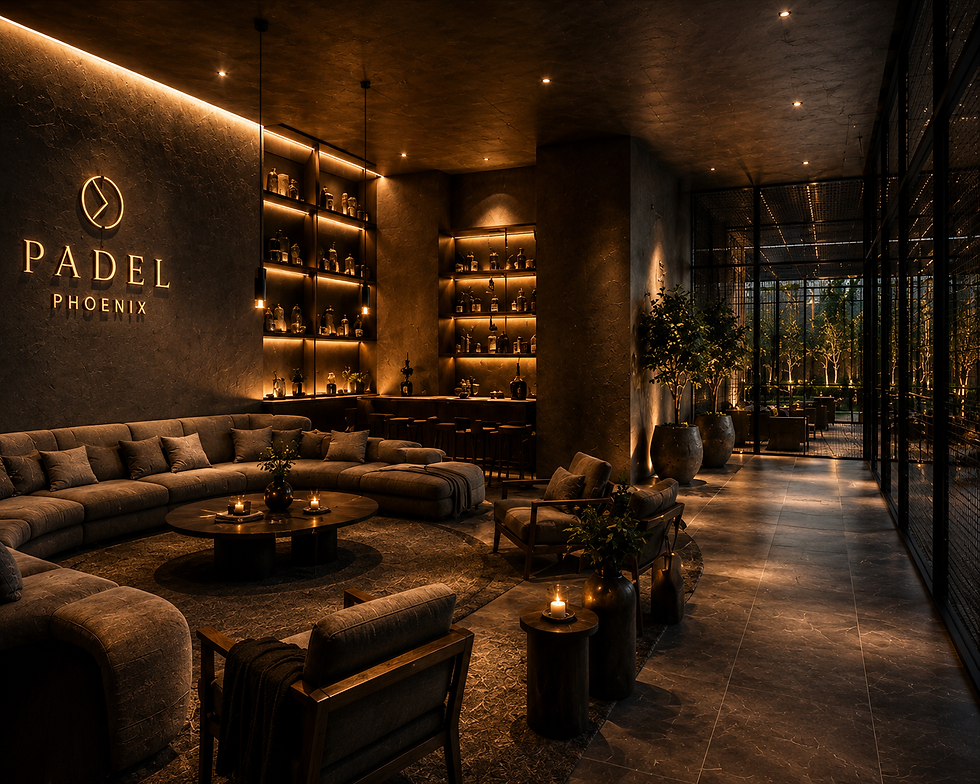
The Rise of Hospitality-Led Padel Clubs
The future of successful padel facilities sits somewhere between sport, wellness, hospitality and social experience.
Modern padel clubs are increasingly integrating:
premium café and bar environments
wellness and recovery facilities
lounges and spectator zones
boutique changing rooms
coworking and social areas
event and community spaces
The result is a destination people want to spend time in before and after matches — increasing customer retention, secondary spend and long-term commercial viability.
Why Design Matters in Commercial Padel Facilities
A successful padel club requires far more than simply installing courts into a warehouse or industrial shell.
Factors such as spatial planning, player flow, acoustics, lighting, circulation and hospitality integration all play a major role in how the environment functions and feels.
Key considerations include:
Arrival Experience
First impressions matter.
The reception, entrance sequence and visual identity immediately shape how premium the environment feels to members and guests.
Social Interaction
Padel is inherently social.
Designing spaces that encourage lingering, interaction and community building is critical to creating successful clubs.
Hospitality Integration
Food, drink and lounge environments are becoming increasingly important revenue drivers for operators.
The strongest schemes integrate hospitality naturally into the overall experience rather than treating it as an afterthought.
Wellness & Recovery
As padel continues to align itself with wellness culture, recovery spaces such as saunas, cold plunge pools, treatment rooms and wellness lounges are becoming increasingly common within premium facilities.
Atmosphere & Lighting
Lighting, materiality and acoustics have a huge influence on perceived quality and emotional experience.
The best facilities feel immersive and destination-led rather than purely functional sports environments.
Commercial Viability Is Key
As more operators enter the market, competition will inevitably increase.
Facilities that rely purely on court hire may struggle long-term if they fail to create a differentiated customer experience.
Commercially successful clubs are likely to be those that:
create strong brand identity
encourage repeat visits
increase dwell time
generate secondary spend
support community and events
blend sport with hospitality and wellness
This is where design strategy becomes commercially valuable.
The Opportunity for Developers & Landlords
Padel is also becoming increasingly attractive within wider commercial and mixed-use developments.
Developers are beginning to explore padel facilities as part of:
hospitality schemes
residential amenities
mixed-use destinations
retail and leisure environments
wellness-led developments
private members clubs
When integrated correctly, padel can help drive footfall, activation and long-term asset appeal.

Padel Design & Build in Practice
At Zero Gravity Design, we support commercial leisure and hospitality-led environments from early concept strategy through to interior design, technical development and fit-out coordination.
Our approach combines commercial thinking with experience-led design — creating environments that are visually impactful, operationally considered and buildable in reality.
As the UK padel sector continues to evolve, we believe the most successful facilities will be those that move beyond simply providing courts and instead focus on creating memorable destinations and experiences.
Final Thoughts
Padel represents one of the most exciting opportunities currently emerging within the UK leisure sector.
But long-term success will depend on far more than court numbers alone.
The facilities that thrive will be those that understand how to combine sport, hospitality, wellness and social experience into commercially compelling environments people genuinely want to return to.
If you are exploring a padel club, leisure destination or mixed-use development, our team would be happy to discuss your project.
Our studio works with clients across Manchester and the UK on a variety of projects. For more information about our commercial interior design services, please contact us today.


Comments